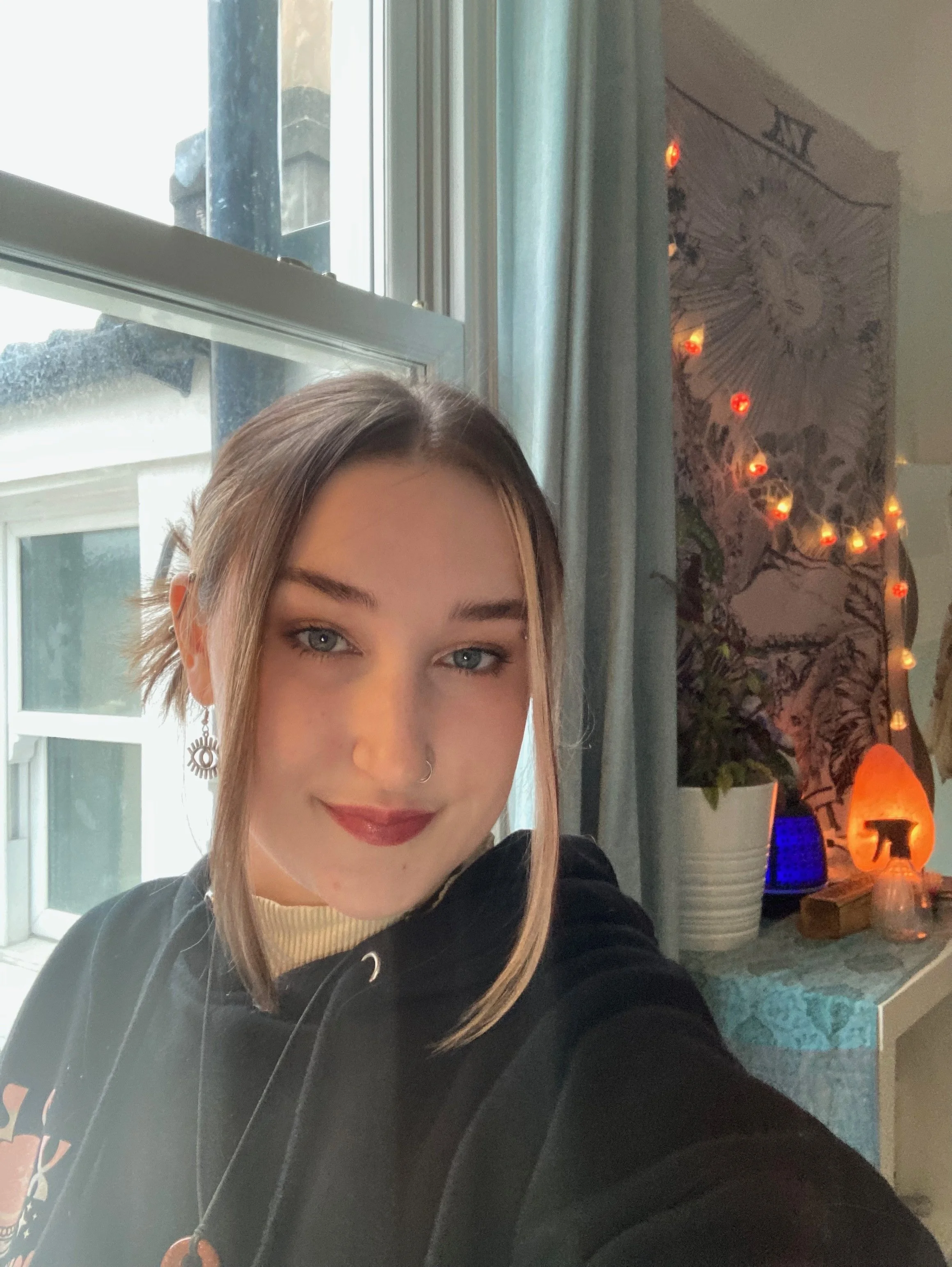
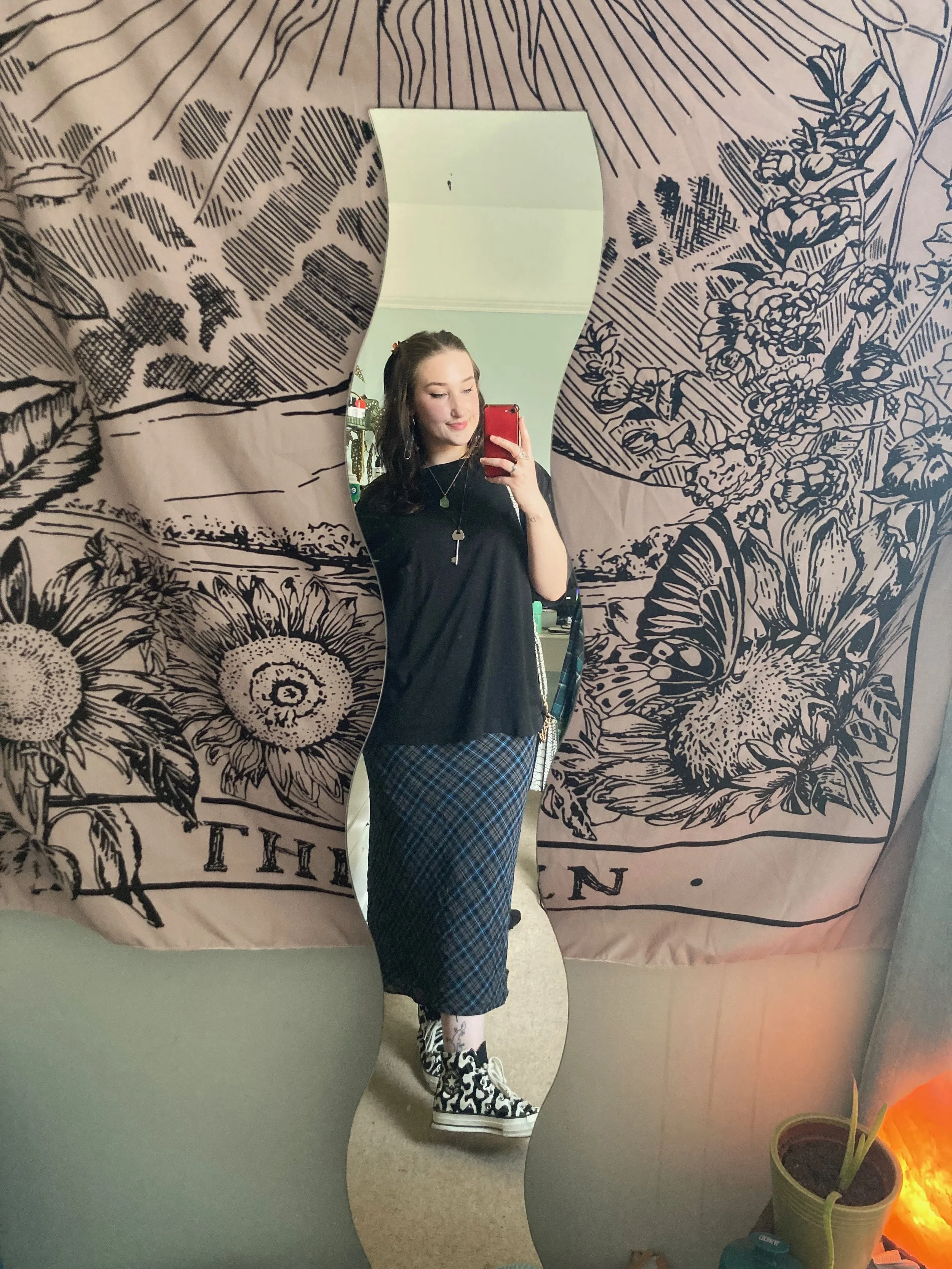
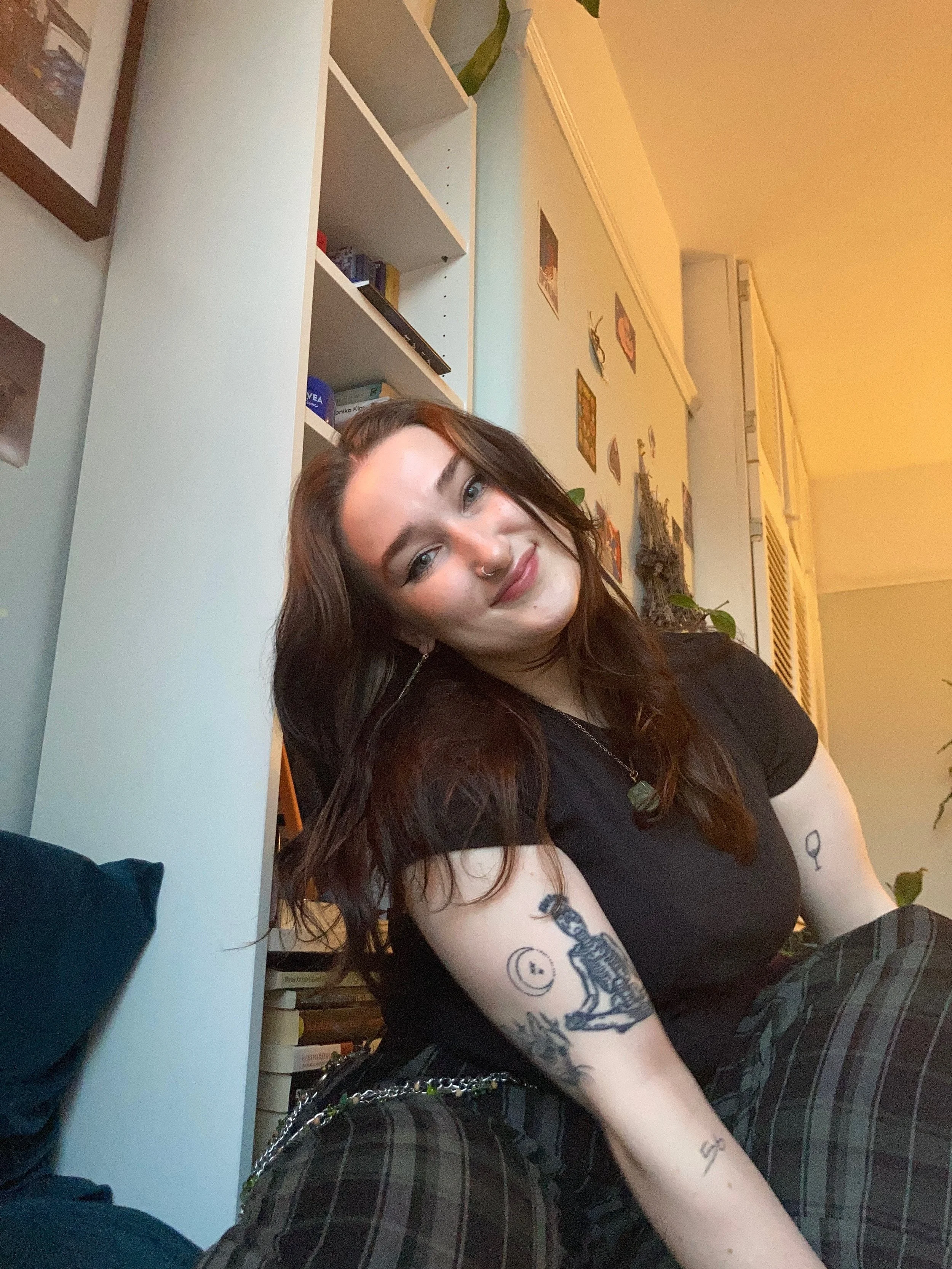
“I recognise I have been ill-equipped my whole life to understand how I operate.”
I spent my teenage years lost in a traumatising environment, feeling out of control, depressed, rageful, anxious, and suicidal, all massively intensified before my period. After receiving my PMDD diagnosis at 16, I tried two medications to find relief: Microgynon and the Depo-Provera injection. Microgynon almost caused a stroke, while the injection made me emotionally numb and caused constant spotting for months. Scared and disappointed, I turned to education instead, helping me find different coping mechanisms and validation that I was not crazy, and that I did not have PMDD because I deserved it.
This helped me navigate PMDD for a while, but after a brief pause in intensity while at university, my early twenties saw PMDD return in full force. I felt 13 again, lost and afraid.
In late 2023, I began experiencing intense PMDD symptoms every single month. I had to move back in with my parents. I tried self-employment through my four years of reading Tarot, but it was not working. I was burning myself out. My PMDD was getting worse. I felt isolated, misunderstood, and exhausted.
I struggled with changing friendship dynamics. I felt like I could not talk openly to anyone. I pushed my feelings down. I feared what my life was turning into. I was falling apart.
My PMDD continued to get worse.
I desperately tried to be someone who did not have PMDD, who did not feel exhausted, act impulsively, or feel things so viciously intensely. When PMDD was not impacting me, I forced myself to fix everything. I had to utilise being “normal” before my descent into hell disrupted everything. I tried to be perfect.
I failed miserably. I let people down. I lost myself. I felt as though everything I wanted to achieve, and who I wanted to be, was rejecting me. That life itself was rejecting me.
Compounded with PMDD, feelings of insecurity, depression, rage, and paranoia spiralled into social isolation, issues in relationships, dissociation, and maladaptive shame. I was reactive. I defaulted to “I am wrong, and I am bad,” rather than “I did something wrong, but I am still a good person.”
I was fed up, and something had to change.
In mid-2025, after deleting social media apps, finally receiving an ADHD diagnosis, starting medication, and finding a good therapist, I realised I had been rejecting myself for years. I learned about Rejection Sensitivity Dysphoria (RSD), and how deeply it had impacted my life due to abandonment, insecurity, and degradation ingrained in me from traumatic experiences beginning at 13. All of this intensified each month alongside PMDD.
Through therapy and personal research, I recognise that I have been ill-equipped my whole life to understand how I operate.
I experience intense rejection sensitivity, executive dysfunction, and emotional dysregulation caused by PMDD and ADHD. This leads to impulsivity, which causes maladaptive shame, reinforcing the belief that I am wrong and bad. I have been combating social reinforcement telling me that my brain should not work the way it naturally works, and that I should not feel the way PMDD causes me to feel. The standards and expectations held against me, which I then hold against myself, are unattainable because they never included acceptance of my emotional and neurological development.
Until now, I did not have the language or knowledge to explain why I feel the way I feel, or how this can lead to actions that cause disruption or tension.
I have been living in a world that tells me it is okay to have PMDD and ADHD, but that displaying symptoms of PMDD and ADHD is wrong. Ultimately, that I am wrong.
Accepting my differences, PMDD, and ADHD has taught me to lead with compassion, to try my best not to judge people, and to understand how other people’s experiences shape their actions. I know the pain of isolation, rejection, fear, and shame. With 2025 bringing these experiences to a crescendo, I have found that a holistic approach involving exercise, therapy, patience, diet, awareness, education, and properly medicating my ADHD works best for me.
Creating a life that accepts my PMDD and ADHD has become my number one priority. I have been forced to slow down, and in doing so, I have found coping mechanisms I can lean on when PMDD is at its worst.
Living with PMDD and ADHD is a lifelong journey. There is no perfect endpoint, no cure. PMDD can be the horror of suicidal ideation, out-of-control rage, ruined relationships, and maladaptive shame spirals. But it is not that for me all the time. And although I have found a new form of guilt in no longer suffering as much as old beliefs tell me I should, I am learning to take life one step at a time, prioritising deep understanding, empathy, and compassion.
I recognise now that without PMDD and ADHD, I might never have found this.
-Hannah